Why Enjoyment Begins with the Eyes
Even before we bring a glass of rosé to our lips, our brain has already begun to savor it. Light filters through the wine, its hue shifting between delicate salmon, cool pink, and brilliant ruby—and instantly, expectations arise: of freshness and fruitiness, of mineral clarity, summery lightness, or a warmer, fuller-bodied sweetness.
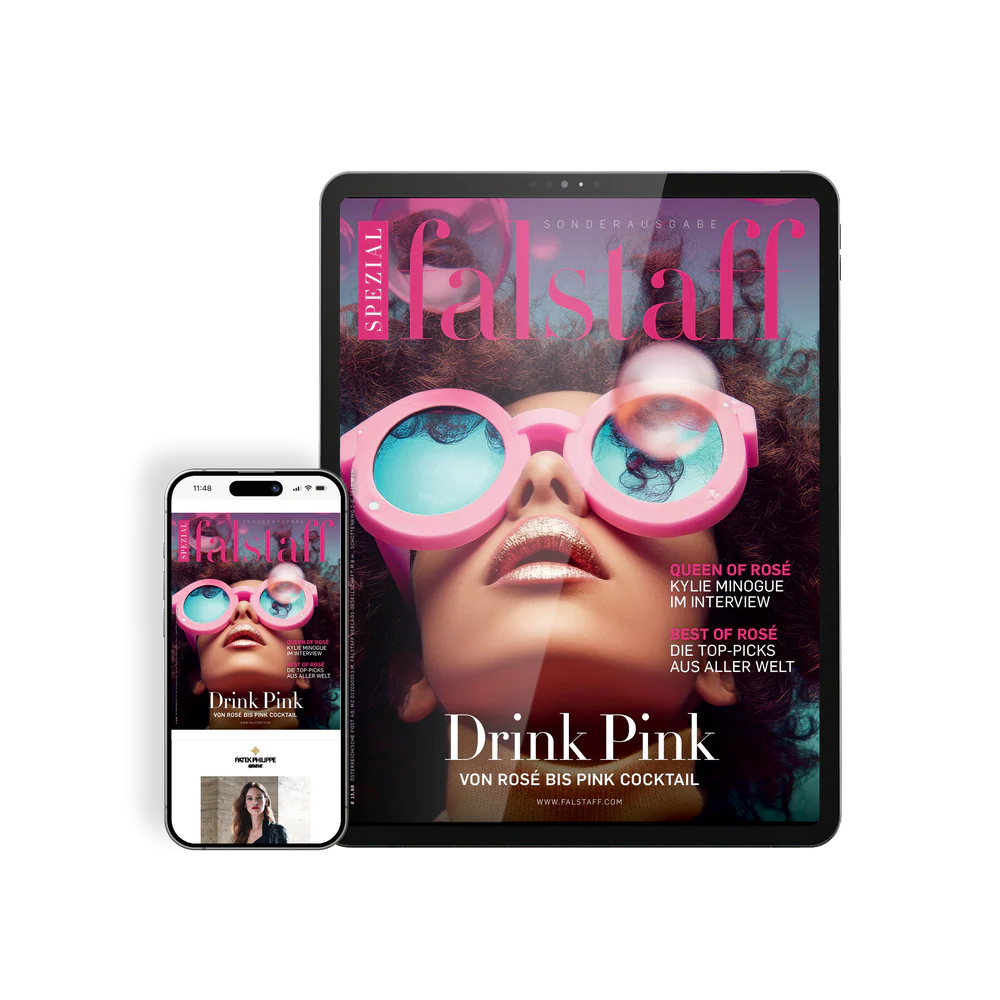
In the current special issue of Falstaff Magazine, titled “Drink Pink,” I explore the fascinating question of why rosé is so much more than just a color—and why the enjoyment of a wine begins long before the first sip.
The brain gets its share first
Colors are not merely properties of objects. They function as sensory signals that link perception, memory, and physical reactions. Through our lifelong experiences, close associations have formed in our memory between certain shades of color and the corresponding smells and tastes.
The mere sight of a rosé wine can therefore already trigger the processes that prepare the body for enjoyment. Salivation, stomach activity, attention, and emotional anticipation all change, even though the wine has not yet been tasted. The eye provides the brain with an initial prediction of what the tongue and nose might experience shortly.
A pale, cool-looking rosé suggests mineral freshness, dryness, and elegance. A more robust, warmer hue tends to suggest ripe fruit, sweetness, and fullness. These expectations are not without consequence: they shape how we perceive and evaluate the actual taste.
Color, aroma, and taste come together to create a shared experience
Our senses do not operate independently of one another. What we see influences what we smell and taste. Color can enhance flavors, make certain scents seem more likely, and even alter our perception of sweetness, fruitiness, or spiciness.
It is precisely the pink hue of rosé that evokes a rich sensory memory: strawberries and raspberries, peaches, rhubarb, rose petals, or fresh citrus zest. Such associations are not retroactive linguistic attributions. They arise directly in the moment of perception—quickly, physically, and largely unconsciously.
That is why pleasure is never limited to the palate. It arises from the interplay of color, light, aroma, taste, memory, and context.
From Soft Pink to a Cultural Statement
Added to this is the cultural significance of the color. Pink has undergone a remarkable transformation in recent decades. Once a shade long associated with delicacy, femininity, or childishness, it has become a symbol of an urban lifestyle: self-assured, aesthetically sophisticated, pleasure-oriented, and lighthearted, without appearing frivolous.
Rosé is therefore more than just a wine. It creates a certain atmosphere and conveys a certain attitude. Anyone who chooses, opens, or serves rosé is simultaneously communicating ideas of hospitality, a zest for life, and refined enjoyment.
Color speaks before a word is even uttered.
When the Eye Keeps Its Promise
The rosé experience is a prime example of just how profoundly color shapes our perception. The enjoyment begins with the sight of the glass, continues through memory and anticipation within the body, and is finally fulfilled in the moment when what the color foreshadowed is confirmed by the aroma and taste.
Perhaps that is precisely what makes rosé so fascinating: its color holds the promise—and a good wine delivers on it.
You can read my full essay , “Rosé Is a Promise—Why Our Brains Start Drinking the Moment We See the Glass,” in the current special issue of Falstaff , “Drink Pink.”