Abstract
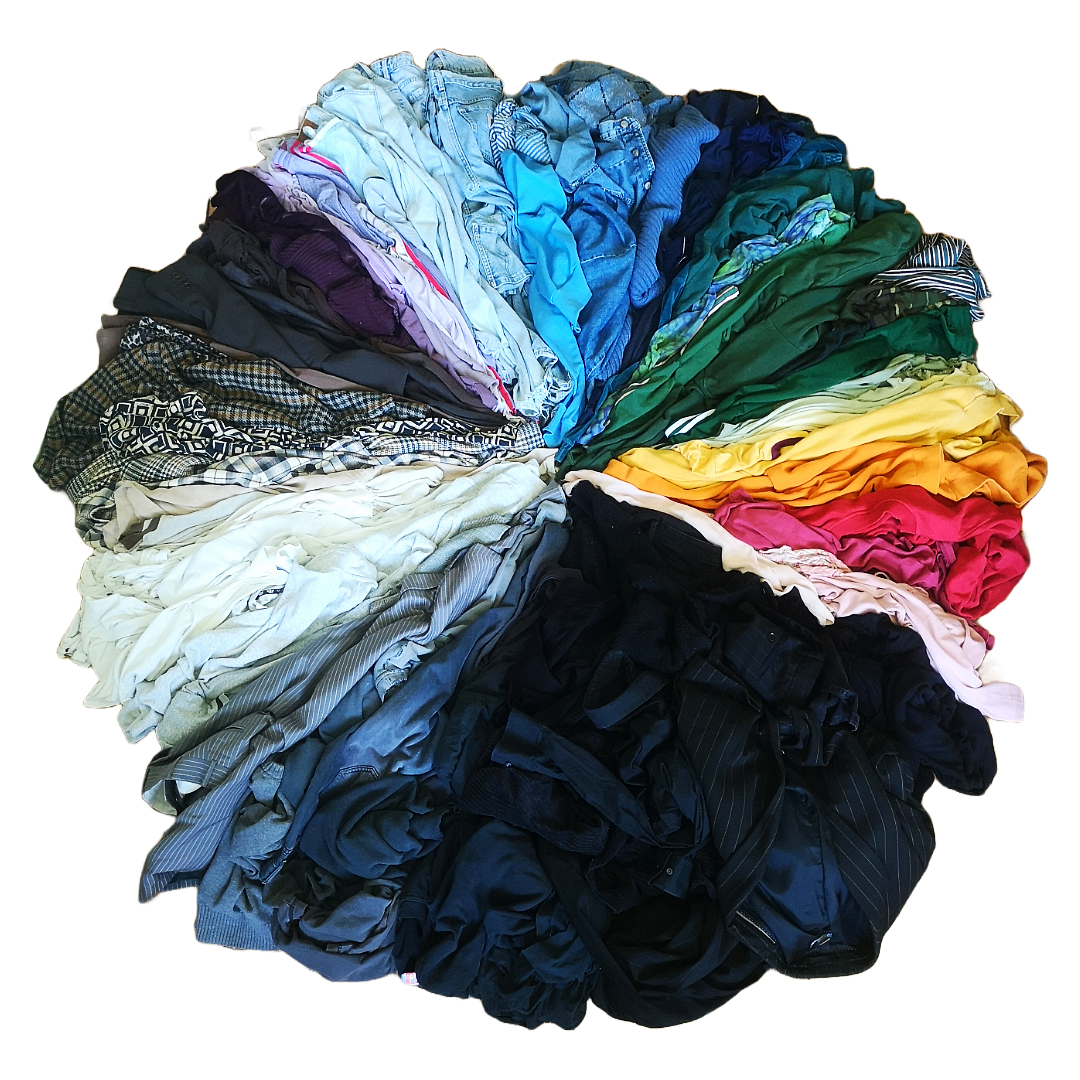
This exploratory study examines the relationship between color preferences in everyday clothing and the Big Five personality dimensions. A novel testing procedure analyzed the color profiles of clothing items worn by 29 participants, regardless of brand, style, or context, and compared these with self-reports and ratings by others. The results show approximately 70% agreement between color profiles and personality traits, particularly in the areas of extraversion, agreeableness, and openness to experience. Qualitative interviews in cases of discrepancies point to emotional protective functions, social roles, or idealized self-presentation. The results suggest that color choice is a sensitive, nonverbal expression of psychological dispositions, with potential for diagnosis, counseling, and further research in color psychology.
1. Introduction
1.1 Background and Objectives
Colors are an integral part of human perception and communication, fulfilling both emotional and social functions (Elliot & Maier, 2014). In personality psychology, it is increasingly recognized that nonverbal signals, such as the choice of clothing colors, can offer deeper insights into psychological dispositions than language-based self-reports, which may be distorted by social desirability or a lack of self-reflection (Vazire, 2010). While earlier studies often examined color preferences in isolation or in the context of marketing and aesthetics (Allensbach, 2014; G.F. Smith, 2017), there is a lack of systematic analyses of color choice in everyday clothing as a long-term expression of personality traits. This study aims to investigate the connection between color profiles of wardrobes and the Big Five personality dimensions (extraversion, openness, agreeableness, conscientiousness, neuroticism). By combining visual color analysis, self- and peer-ratings, and qualitative interviews, the study aims to develop a novel diagnostic tool that reveals unconscious personality patterns and potential dissonances in self-concept. The goal is to establish color choice as a reliable indicator of psychological processes, with potential applications in personality assessment, psychotherapy, and intercultural research.
1.2 The Relevance of Color Psychology to Personality Research
Color psychology examines how colors influence perception, emotions, and behavior, and has gained significance in recent decades (Elliot & Maier, 2014; Zhang & Chen, 2023). Colors serve as a universal means of communication that integrates biological responses (e.g., increased attention in response to red) and cultural meanings (e.g., blue as a symbol of trust) (Higham et al., 2013; Hofstede, 2001). In personality research, colors offer a unique window into implicit psychological processes, as they can reflect unconscious preferences and emotional states that language-based methods such as questionnaires often fail to capture (Maier et al., 2009). In particular, the Big Five dimensions, which describe stable personality traits (Costa & McCrae, 1992), can be externalized through color choice, as these traits are linked to specific emotional and social tendencies (DeYoung et al., 2007). The present study uses this approach to interpret color choice in everyday clothing as a nonverbal “diary” of personality (Hebdige, 1979). The relevance lies in the ability to make unconscious or difficult-to-articulate aspects of personality visible, which is particularly useful in therapeutic contexts or when analyzing discrepancies between self-perception and others’ perceptions (Vazire, 2010).
2. Theoretical Framework
2.1 Colors as a Communication System
Colors have a more immediate impact than words and carry both biological and cultural meanings (Elliot & Maier, 2014; Hofstede, 2001). Red signals energy, blue signals trust, and yellow signals creativity—patterns that vary from person to person but exhibit consistent psychological effects (Higham et al., 2013; Elliot et al., 2023). The diversity of color shades defies linguistic categorization, as terms like “red” or “blue” cannot capture thousands of nuances.
2.2 Clothing as a Visual Diary
Clothing conveys identity, status, and emotions (Hebdige, 1979). The choice of colors in one’s wardrobe reflects not only fashion but also long-term, often unconscious personality patterns (Adam & Galinsky, 2012).
2.3 Self-perception vs. external perception
Discrepancies between self-perception and external perception are a well-known phenomenon in personality research (Vazire, 2010). Self-reports can be distorted by social desirability bias or a lack of introspection, while external assessments interpret intuitive signals such as colors. This study uses color choice to visualize such discrepancies and analyze their psychological causes.
3. Research Questions and Hypotheses
Research Questions
- To what extent do color patterns in everyday clothing correlate with the Big Five personality traits?
- How closely do color-based external evaluations and self-evaluations align?
- What psychological or social factors explain discrepancies between color profile and self-image?
- What role do situational contexts and emotional coping strategies play in color choice?
- Can this method capture implicit aspects of personality that questionnaires overlook?
Author of the study: Prof. Dr. Axel Buether
Institute for Evidence-Based Color Psychology
University of Wuppertal
Support: Leonie Weddeling, BA (Research Assistant)
Citation: DOI.10.5281/zenodo.16846010
Download English Version (Zenodo Open Access Resource)
Download German Version (ResearchGate Open Access Resource)