
Authenticity and Honesty in Architecture
Architecture is an art of illusion. It shapes the world as we experience it and gives highly complex technical structures a form that serves us, inspires us, and sometimes even enchants us. But it is precisely this transformation of technical reality into a sensory experience that raises questions about honesty and authenticity—especially when it comes to color and material. White, gray, and black are often perceived as “authentic,” while bright colors are relegated to the realm of “decoration.” But is this perspective really as true as it seems?
White Modernism and Its Illusions
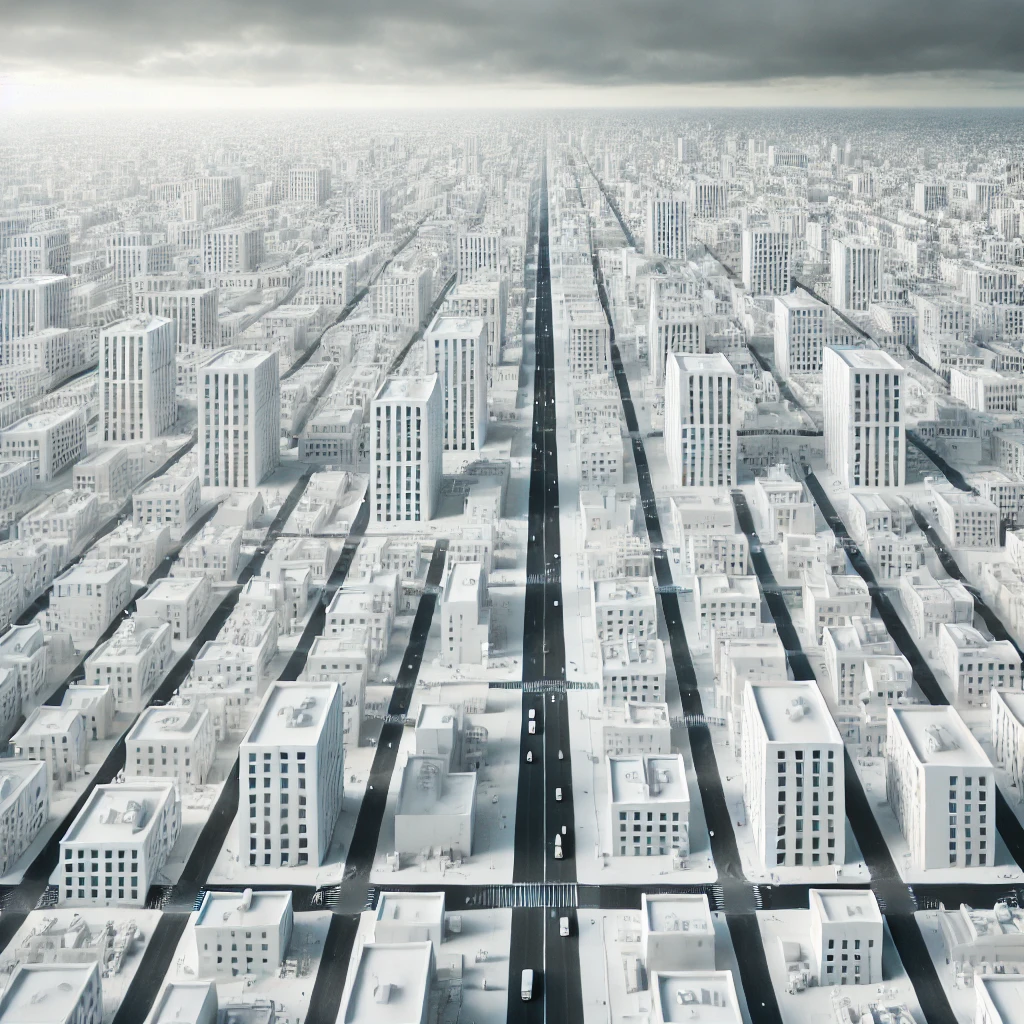
White—the symbolic color of modernism. For architects such as Le Corbusier, Walter Gropius, and Mies van der Rohe, it became the very essence of simplicity and purity. It was a manifesto against “ornament as a crime,” as Adolf Loos put it in 1908. Yet this choice was by no means neutral. Rather, it bore religious, cultural, and even illusionistic traits. Adolf Loos spoke of the “white walls of Zion,” a reference that almost sanctified architecture. Modernism also took the supposedly white antiquity as its model—a misunderstanding, since ancient temples were painted in bright colors.
The uniform white of modernism is an illusion: it suggests a sincerity and simplicity that often do not exist. The white walls of the Cyclades or the Mediterranean region, which so often serve as inspiration, are also an illusion—they are suited to a climate with hot summers and blazing sunlight, but not to regions with cold winters and gray autumn days. Their texture and color scheme stem from a specific necessity, not from a universal truth.
Color as a Dimension of Perception
Colors—and thus the choice of materials—are far more than just a decorative shell. They create atmospheres, influence moods, and can open up spaces where there are no windows. In healthcare and nursing architecture, for example, color is not a minor detail but is essential to the well-being of patients and staff. Dark hallways and bare walls create a sense of alienation, while imagery and warm hues foster a sense of security and identity.
Even materials that seem “deceptive” at first glance—such as wood-look finishes on PVC—have their place when they combine functional requirements with sensory needs. A wood-look finish can convey natural warmth in places where real wood flooring isn’t an option due to cost or maintenance concerns. In this case, the illusion isn’t a deception, but rather a service to the user. Studies show that people feel more comfortable in spaces where color and design have been carefully considered. Why should we do without that?
Architecture as an Interface
Architecture is an interface. Just as a smartphone’s display conceals the technology beneath it and provides access for the user, so it is with buildings. The facade and the interior clothe and organize the structure. Gottfried Semper’s 19th-century theory of “clothing” provides a valuable foundation here: architecture is always both an aesthetic shell and a functional entity. Its purpose is not to reveal the bare structure to us, but to create a usable and appealing environment.
The question of “material honesty” is often framed too narrowly. Modern buildings consist of highly complex, multilayered building materials that must simultaneously meet technical, thermal, and aesthetic requirements. A white coat of paint that conceals this complexity is not an expression of honesty, but a deliberately chosen presentation—an illusion that serves a purpose. Why should we condemn similar presentations involving colors and motifs that are equally useful?
The Illusion of Perception
The latest findings in brain research show us that our entire visible world is essentially an illusion. It is based on the physical existence of matter and energy, but is constructed solely through the perceptions conveyed to us by our senses. These senses have evolved in symbiosis with nature according to the principles of evolution. They depend on perceiving variations in the environment—whether in colors, sounds, or other sensory dimensions. Just as music exists only through variations in tones and rhythms, our visual perception also thrives on the diversity of colors in nature. Architecture that dispenses with variations and sensory stimuli therefore loses its resonance with our evolutionarily shaped needs and comes across as alienating.
Architecture should serve people and fulfill their fundamental needs for beauty, well-being, and identity. These needs are diverse and ever-changing. A return to a rigid, supposedly “honest” color scheme robs us of this diversity. Color is not mere decoration, but a dimension of architecture that must be planned just as carefully as the structure itself.
Architecture is an illusion, and that is not a weakness. It is its greatest strength. It creates a world that does not deceive us but inspires us—a world that serves us by surrounding us with its beauty and functionality. The challenge lies in shaping this illusion in such a way that it honestly serves humanity. Only in this way can architecture achieve what truly defines it: creating a connection between technology, art, and people.
Architecture is a deeply social and communicative discipline that focuses on how built spaces are perceived and how they affect their users.
Axel Buether, November 22, 2024