Manufacturers are investing billions in new car bodies, headlights, and radiator grilles. Yet the most powerful signal a car can send remains untapped. Why color is the fastest and lowest-risk lever for evoking emotion, fostering identification, and driving sales.
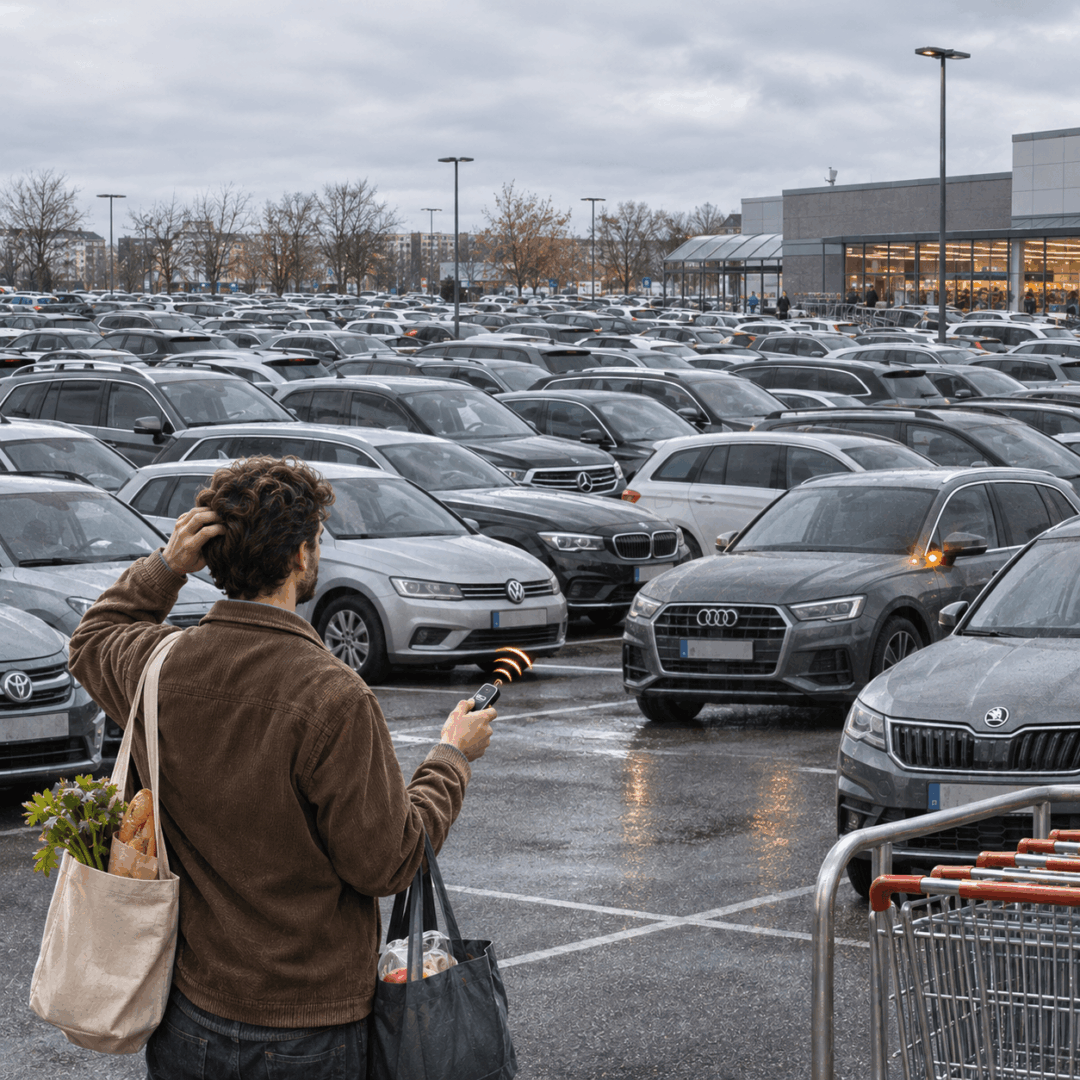
Imagine your design team has spent three years working on a facelift. A new front bumper, a new lighting signature, a sharper-looking grille. The model hits the market—and a few months later, it’s sitting in a supermarket parking lot. Gray next to gray, black next to white. The customer, looking for his car, doesn’t recognize it until the turn signals come on.
This is not a marginal phenomenon. In Germany in 2025, nearly four out of five new cars were gray, black, or white. Worldwide, the share of neutral colors is three-quarters or more. The industry is constantly changing its designs—while sticking with the aesthetic that resonates most quickly and powerfully with people.
The eye notices color first
As a psychologist specializing in perception and color, I have been exploring for decades how our brains interpret the visible world. The sight alone reveals meaning and possible courses of action to us—long before we consciously think about it. Color is one of the quickest cues in this process: It is perceived earlier than movement and, in attention studies, processed faster than geometric shapes. It groups elements together, directs the gaze, and immediately evokes experiences and emotions.
A frequently cited review article on color in marketing concludes that 62 to 90 percent of initial product evaluations are based solely on color. One might debate the exact figure. The trend is clear: A change in shape must first be noticed, while color has an immediate effect.
The Shape Trap
The auto industry focuses its innovative efforts primarily on design. Even with shorter development cycles, new models take about three years to develop, and model refreshes consume large budgets. The result is differences that excite experts—but on the road, they get lost in the uniformity of the gray tones. To the observer, a new design in silver-gray is barely distinguishable from the old one.
A new color, on the other hand, completely transforms a model’s appearance without requiring a single new tool to be built. Paint manufacturers develop their trend colors two to three years in advance—that is, in line with model updates, not the platform. Hardly any other strategy offers so much visible innovation for so little effort and risk.
What the fashion industry has known for a long time
The fashion industry shows how it’s done. Every season, it sells tried-and-true cuts in new colors—and generates billions in revenue as a result. The risk is manageable because the design is proven; the color provides the appeal of novelty and the reason to buy.
Barbie pink has shown just how powerful a single trend color can be. According to data from the payment service provider Klarna, sales of pink mini-dresses rose by 970 percent in the summer of 2022 within half a year. In the United Kingdom, sales of fuchsia-colored clothing rose by 44 percent. Paint manufacturer Benjamin Moore reported a 400 percent increase in sales for its Color of the Year.
Color alone doesn’t make a good product. But it acts as an amplifier: it makes a good product visible, desirable, and distinctive.
An orange that’s breaking records
The most striking recent example comes not from the fashion industry, but from the tech sector. Apple offered the iPhone 17 Pro in an eye-catching orange for the first time. In the following quarter, the company posted its best-ever iPhone sales in China, with revenue in the region rising by 38 percent. Market researchers cited the color as a key purchasing factor: it made the most expensive model instantly recognizable and reestablished the iPhone as a status symbol.
That’s the lesson for the auto industry: A color can reposition a product in the minds of consumers—faster and more effectively than any technical improvement.
Why the auto industry remains gray nonetheless
The reason lies less with the customer than with the structure of the market. Two-thirds of all new cars in Germany are registered for commercial use. Leasing companies and fleet managers choose vehicles that will be easiest to resell after three years. In this logic, color is considered a risk. These company cars then dominate the used-car market for years—and thus shape everyone’s expectations.
However, the residual value argument is only half true. Non-colored cars sell faster, but they don’t hold their value any better. An analysis of more than one million used cars in the U.S. shows that yellow cars depreciate significantly less than average, while white and black are among the worst performers. On German used-car marketplaces, too, rare colors command noticeably higher prices. Scarcity creates value.
Choosing a color shows personality
At my Institute for Evidence-Based Color Psychology at the University of Wuppertal, we have conducted the world’s largest studies on the relationship between color preferences and personality based on the Big Five model. The result is a striking correlation: open, extroverted, and agreeable people tend toward colorful hues, while introverted and reserved people tend toward achromatic colors. This is evident even in individual, freely made color choices.
For manufacturers, this means that those who offer only variations of gray tones lose emotional appeal with precisely those customers who generate enthusiasm, spread the word, and identify with a brand. And these customers are willing to pay. In the luxury segment, starting at around 120,000 euros, manufacturers offer a wide variety of custom colors—often at a significant premium, which this demographic is happy to pay. Porsche now offers over 190 color shades and has reported a sharp rise in demand for custom paint jobs for years.
The Cost of Conformity
The cost of fading isn’t reflected on any balance sheet—and yet it’s high. Owners have been shown to feel a stronger attachment to their cars than leaseholders. Consumer research recognizes the “I designed it myself” effect: We value things we’ve designed ourselves more highly and are willing to pay more for them. Color is the most visible form of this self-expression.
When it’s missing, owner pride, brand loyalty, and unique positioning fade away. If a model on the road looks just like a competitor’s, it becomes interchangeable—and in the end, price is what determines whether it’s interchangeable.
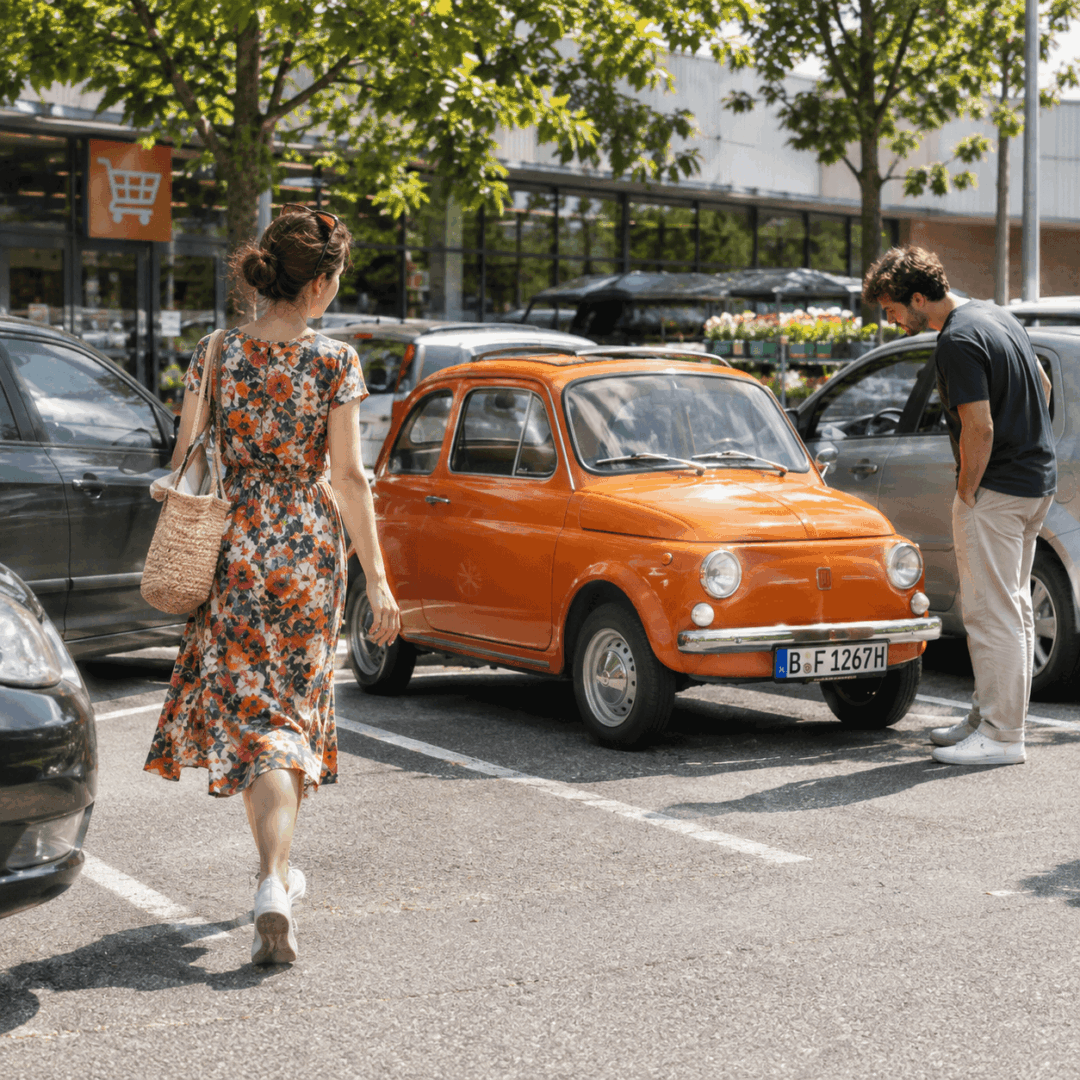
Anyone who has ever been to Havana knows just how much excitement color can generate. The colorful vintage cars—seemingly frozen in time since the early 1960s—drew waves of enthusiasm from tourists every day. No facelift in the world can produce such an effect.
Five Levers for Marketing and the Executive Board
- Make color a top priority. Color is not just a design detail, but a strategic tool for brand management—it belongs in the product strategy, not on the list of optional extras.
- Develop a signature color for each model. A distinctive, recognizable color positions a model more quickly than any change in shape.
- Offer color at no extra charge. Making distinctive colors standard lowers the barrier to emotional purchasing decisions.
- Rethink residual value models in collaboration with leasing companies. Rare colors command higher prices on the used car market—this should be factored into the calculation.
- Make color decisions based on evidence. It’s possible to measure which color suits which target group, brand, and culture. Rely on certainty, not wishful thinking.
The opportunity is right there on the street
The automotive industry is facing a profound transformation in which many models are becoming increasingly similar in terms of technology. That is precisely why appearance is becoming the decisive distinguishing feature. Those who recognize color as a strategic tool now will gain visibility, evoke emotion, and foster identification—with relatively little effort and risk.
Color is not a luxury, but a means of communication. The only question is which manufacturer will be the first to take it seriously again.
If you’d like to know which color strategy suits your brand and your target audiences, please feel free to contact me.
Sources
- Federal Motor Transport Authority / VDA (2026): Color Analysis of New Passenger Car Registrations in 2025.
- Axalta Coating Systems (2025): Global Automotive Color Popularity Report 2025.
- BASF Coatings (2025/2026): Color Report for Automotive OEM Coatings 2025; Automotive Color Trends 2025–2026.
- Singh, S. (2006): Impact of color on marketing. Management Decision, 44(6), 783–789. doi:10.1108/00251740610673332
- Moutoussis, K. & Zeki, S. (1997): A direct demonstration of perceptual asynchrony in vision. Proceedings of the Royal Society B, 264, 393–399.
- Jonauskaite, D. et al. (2020): Universal patterns in color-emotion associations. Psychological Science, 31(10), 1245–1260.
- Franke, N., Schreier, M., & Kaiser, U. (2010): The “I Designed It Myself” Effect in Mass Customization. Management Science, 56(1), 125–140.
- Grund (2025): I Love My Car: Conditions of a Positive Human-Car Attachment. Dissertation, University of Tübingen.
- iSeeCars (2025): Car Color Depreciation Study.
- Car Dealership (2025): Color Determines the Price of a Used Car.
- Financial Times / MacRumors (2026): iPhone 17 Pro’s Cosmic Orange Color Linked to 38% Jump in Sales in China.
- Inside Retail (2022): Klarna Data on the Barbiecore Trend; TheIndustry.fashion (2022): Clearpay Data for the UK.
- The Hustle: Benjamin Moore Color of the Year Blue Nova.
- Porsche Newsroom (2025): How Custom Colors Are Created Based on Customer Requests.
- Volkswagen / motor1 (2024): Development time for new models is 30 to 36 months.