
Why do colors exist in the first place? What biological and cultural functions do they serve? And what changes when we use this knowledge not only to explain our perceptions, but also to create a more humane environment?
These questions have been at the heart of my research for many years. They were the focus of a studio discussion for the series “Die eine Frage” on Deutschlandfunk Kultur, which lasted just under 30 minutes. The program aired on August 28, 2026, as part of “Studio 9.”
For me, the starting point is a fundamental shift in perspective: Color is not a property of things. It arises as a perception within us. Matter and electromagnetic energy form the external conditions—but the world of color only comes into being through the interaction of the eyes and the brain, the body, memory, and experience. That is why color is far more than mere aesthetic decoration. It is one of the oldest and most powerful media through which people distinguish, evaluate, remember, and shape their environment.
From an evolutionary perspective, color vision helped us identify food, assess dangers, evaluate habitats, and perceive social cues. Culturally, we have developed this biological ability into a highly complex communication system: colors structure spaces and objects, signify belonging, create identity, and convey meaning long before we consciously put them into words. This intersection of evolutionary biology, perceptual psychology, and design forms a core focus of my research.
Why, then, do we still live in a predominantly white environment?
A second focus of the discussion was the built environment. A very large proportion of today’s wall and ceiling surfaces are painted white or designed to be nearly achromatic. In doing so, we are forgoing a significant part of our perceptual capabilities precisely in the places where people spend a large part of their lives.
For me, humanistic environmental design therefore begins with people: How does a space support orientation, relaxation, concentration, communication, identification, and well-being? What color schemes suit the activities and needs of the people who live and work there?
Evidence-based color design does not mean making rooms as colorful as possible. It means using color so precisely that it can fulfill its biological, psychological, and social functions. Color thus transforms from a decorative addition into a design element that shapes the environment.
What do our favorite colors reveal about us?
The third set of topics moved directly from the environment to personality. Why does one person feel exceptionally comfortable with a deep ultramarine, while another prefers light turquoise tones or warm shades of orange and red?
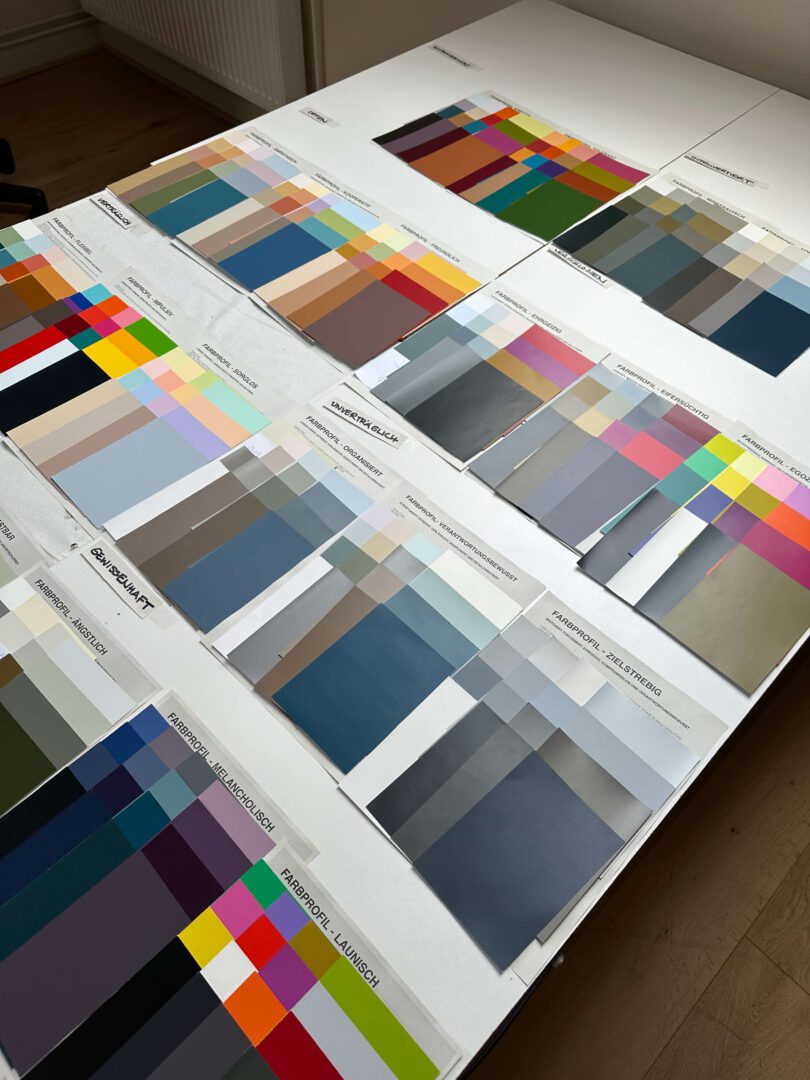
Color preferences arise from the interplay of biological factors, individual experiences, and cultural influences. In my research, I also examine the relationships between color preferences and personality traits—based, among other things, on the Big Five model.
This opens up an exciting new perspective on design: What if we could choose our clothing, cosmetics, living spaces, and products based more on who we truly are and how we experience ourselves?
Colors can then help bring our personalities to the fore. Clothing and makeup wouldn’t have to follow ever-changing trends; instead, they could enhance our individuality. Living spaces could better reflect our personal needs. Products would be cherished for longer because their design isn’t just appealing in the short term but fits who we are over the long term.
For me, this also raises the issue of sustainability. We don’t need to replace things that truly suit us as quickly.
Can color design help us live more authentically?
Perhaps this is the most socially interesting implication: Color does more than just promote well-being. It plays a role in how we see ourselves and how we want others to see us.
We always design our appearance, our homes, our workplaces, and our products as a form of social communication. Color is one of the fastest forms of communication there is. Even before someone analyzes our style or understands our words, our appearance—as conveyed by color—has already made an impression.
A good color scheme, therefore, does not help create an artificial effect. At best, it does the opposite: it makes our personality, our needs, and our attitude authentically perceptible.
This is exactly where color psychology and design come together for me. If we better understand why colors exist, how they affect us, and what experiences we associate with them, we can design our environment more consciously—making it healthier, more personalized, more social, and more human.
The interview on Deutschlandfunk Kultur explores these three major topics: Why do colors exist? How can we use their effects to create a more humane environment? And what do our color preferences reveal about our personalities?
The program is just under 30 minutes long and can be listened to on Deutschlandfunk Kultur .