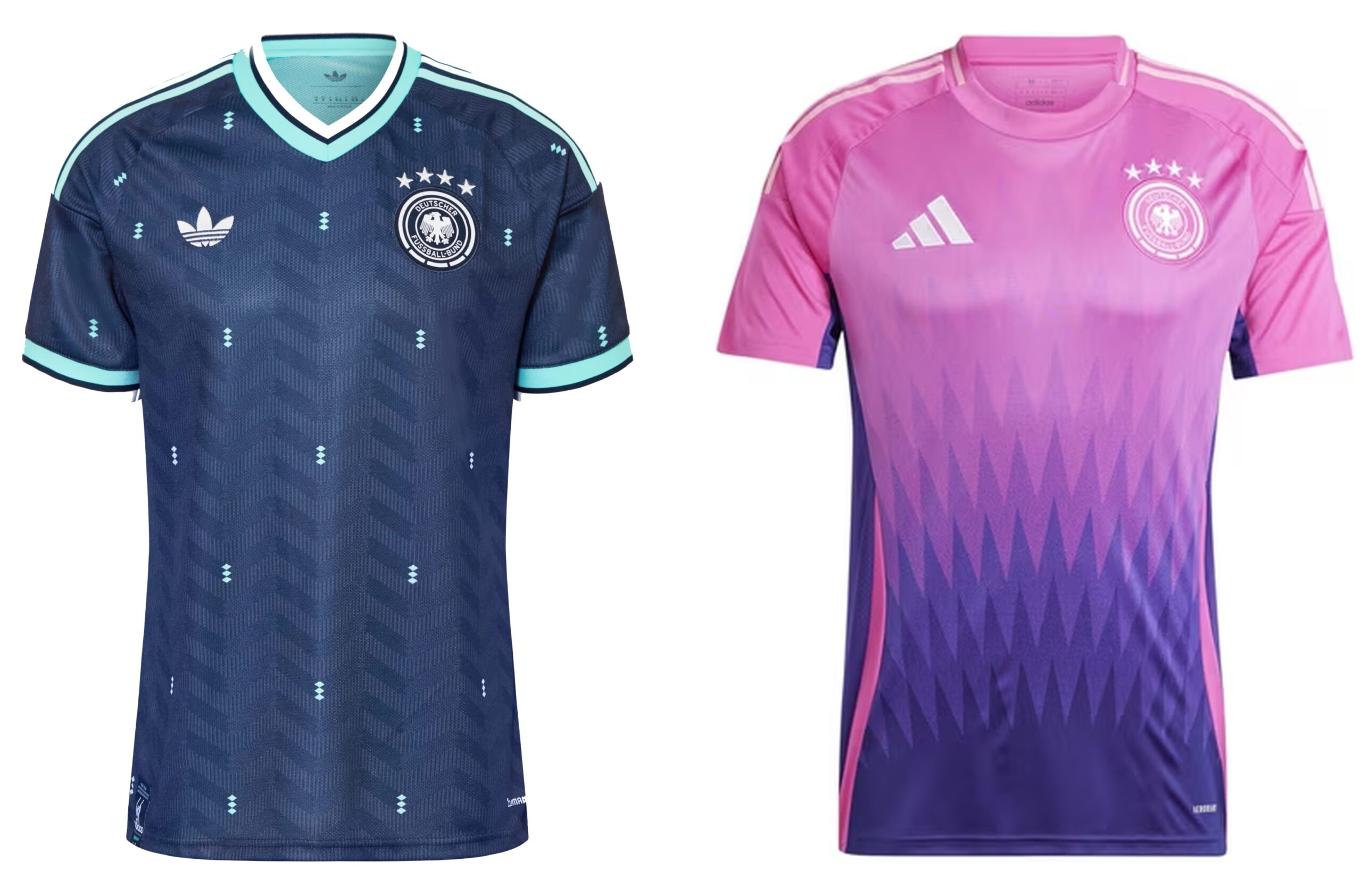

A few days ago, I was faced with a purchase decision that really shouldn’t have been one. A new car. Technically convincing. Strong brand. Good equipment. Reasonable price. And yet we didn’t buy it. The reason was the color. More precisely: the lack of color.
The range on offer consisted mainly of black, white and gray. What may seem like a reasonable offer from the manufacturer’s point of view led to an unexpected result for us: we opted for a different vehicle.
This example may seem banal at first. In fact, it points to a development that could become strategically important for companies in the coming years – the role of color in communication with artificial intelligence.
The new authority between brand and people
With generative AI systems such as ChatGPT, Gemini or Claude, a new player is emerging between companies and consumers for the first time in the history of marketing. These systems not only find brands. They describe, compare, evaluate and recommend them.
Millions of people are already using AI to select products, plan trips, compare service providers or prepare purchasing decisions. The traditional search engine is increasingly becoming a conversation partner.
The crucial question is therefore no longer just:
How do people perceive a brand?
But increasingly also:
How does AI perceive a brand?
Color becomes machine-readable
The result is a fascinating change of perspective. Color no longer only affects people. It also increasingly affects the systems that support people in their decisions.
Of course, an AI has no preference for red, blue or green. It has neither taste nor emotions. But it analyzes data. It processes images. She recognizes patterns. And it links information.
This is precisely why color becomes relevant. This is because color is one of the few characteristics of a product or brand that is visible, describable, categorizable and emotionally meaningful at the same time.
What AI learns from colors
For AI systems, color fulfills several functions simultaneously.
It is initially a product feature. People look for black watches, green sofas, red bicycles or sand-colored facades. Accordingly, colors are listed as independent attributes in product databases, online stores and recommendation systems.
At the same time, color is one of the most important visual recognition features. Modern image analysis systems can automatically identify and describe dominant colors in logos, packaging, products, interiors or websites.
Color also conveys meaning. For decades, studies in marketing, perceptual psychology and brand research have shown that colors can influence the perception of competence, dynamism, sustainability, high quality, trust or innovative strength.
The scientific discussion about individual color effects is complex and context-dependent. However, it is undisputed that colors shape the brand personality and make a significant contribution to brand recognition.
It is precisely these correlations that are also becoming increasingly visible for AI systems.
The silent power of color
The importance of color is often underestimated.
For decades, numerous studies have shown that visual features play a significant role in spontaneous product evaluations. Studies on brand perception have repeatedly shown that colors are among the strongest factors for recognition, differentiation and emotional positioning.
In many markets, products can hardly be distinguished from one another in technical terms. The differences lie increasingly in perception. And perception is always a question of design.
Anyone walking through a supermarket today will recognize this immediately. Packaging competes for attention. Colors structure shelves. They signal product categories, price levels, quality promises and brand identities.
People are intuitively guided by this. In the future, AI systems will also do this – but in a different way. Not about emotions, but about data.
From color psychology to AI visibility
This fundamentally changes the role of color. So far, the focus has been on their effect on people. In the future, how colors are digitally captured, described and processed will also become relevant.
A brand whose color scheme is consistently documented, whose products bear precise color designations, whose image data is of high quality and whose visual identity is clearly communicated, provides an AI with significantly more information than a brand that views color merely as a decorative element.
Color thus becomes a component of digital visibility. Not only in people’s heads, but also in the data structures on which AI systems base their recommendations.
A new field of research and action
There is still no scientific study that proves that ChatGPT prefers a brand based solely on its logo color. That’s not the point. The decisive development is more subtle.
Color influences images, descriptions, product data, user queries, ratings and brand associations. It is precisely this information that forms the basis on which AI systems understand and classify products and brands.
This creates a new field of research at the interface of color psychology, brand management, data economics and artificial intelligence. If you want to influence how AI talks about a brand, which products it recommends and how it describes companies in the future, you should no longer view color exclusively as an aesthetic decision.
Color is becoming a strategic communication medium – for people and machines.
Seminar note
What consequences does this have for brand management, product development, packaging design, e-commerce and corporate communication?
We will address these questions together with brand and brain researcher Olaf Hartmann in the seminar “Strategic color design for brands” on September 3, 2026 at the RAL AKADEMIE in Bonn.
Based on current research results, practical examples and interactive exercises, we will show how colors can influence perception, purchasing decisions and, in the future, AI-based recommendation systems – and how companies can develop sustainable competitive advantages from this.
Because the central question is no longer just what effect colors have on people.
But also how the intelligent systems of the future will read colors.