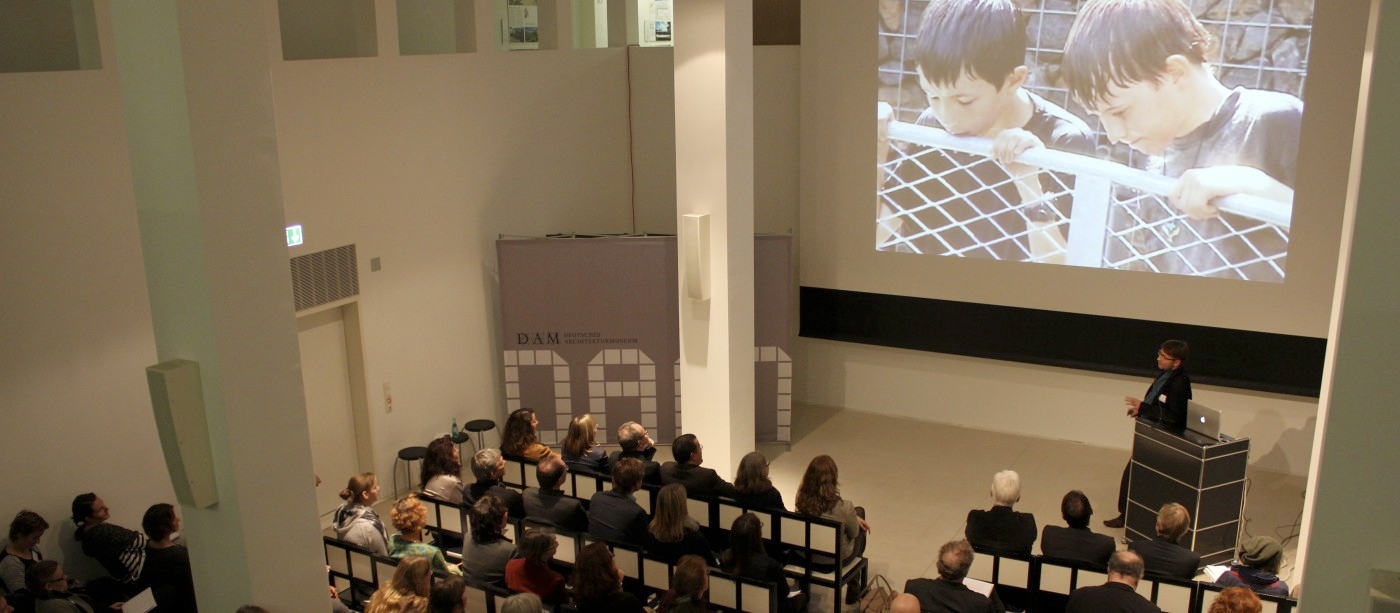
Conference at the Deutsches Architekturmuseum (Photo © Deutsches Architekturmuseum)
The form of perception – (perceiving), (grasping), (grasping), (lay) over, (present)
The concept of form characterizes the process of multisensory engagement of the human being with the material and energetic structures of the environment, through which one’s own existence takes shape, acquires character, prestige and value, and becomes image, design, figure, geometry, model and imagination. This variety of meanings of the term form, derived from the Latin, still exists in linguistic usage today, although the understanding is determined by the situation in which it is used. As I will show, birth-blind people understand it differently from sighted people. Scientists use the term in relation to chemical elements, biological growth processes and behavior or physical descriptions of the state of matter and energy. Mathematicians refer to formal-logical principles, while humanities scholars form their thoughts using the language of words. Musicians shape tones and sounds, restaurateurs shape the smell, taste and aesthetics of our food. Dancers, actors and athletes shape their bodies, urban planners and architects reshape nature, engineers shape transportation, production and communication technologies. Designers shape products, politicians shape the state and citizens shape society. Artists give form to their inner images.
When we physically take something into our possession, grasp it, seize it, place it before us, or position it, we form a conception of the thingness of our existence, thereby ascribering a concrete existential character to our mere and unreflective being. Through the explication of the multisensory experiences of taking, the perception of form is formed in the observer’s memory, the image of the thing, which initiates the cognitive process of perceiving, grasping, comprehending, reflecting , and imagining . Being reaches consciousness through the shaping of our perceptions, which is why the formation of the synaptic structure of our brain is characterized by a learning process through which the formal language of the environment develops and is transformed throughout our lives.
Christina Budde / Barbara Shatry / Inez Wagner / Arne Winkelmann (eds.)
ARCHITECTURE ALL DAY LONG
Opportunities for Architectural Education
Munich 2014, 148 pages with numerous color illustrations
ISBN 978-3-86736-234-4
kopad Munich 2014